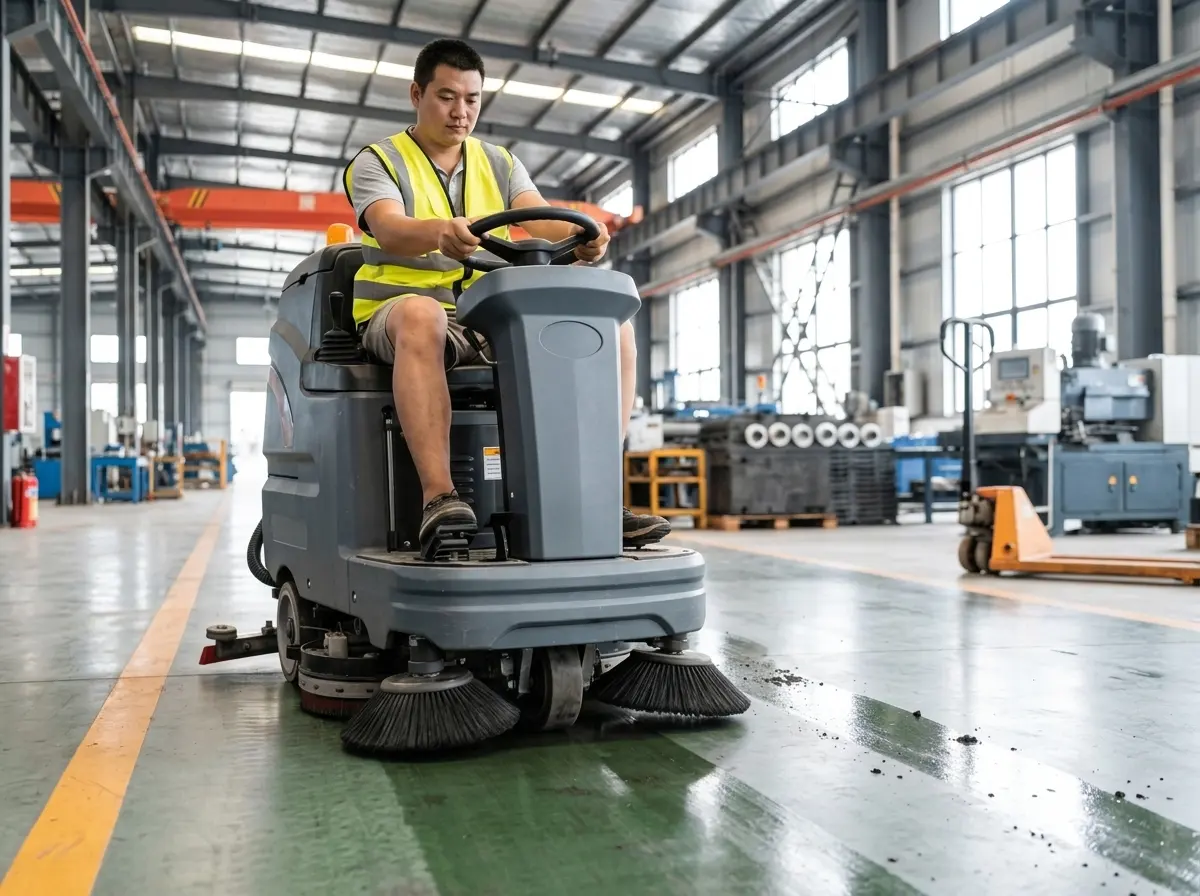
Industrial & Warehouse Cleaning
Industrial & Warehouse Cleaning in Perth
Floor-to-amenities cleaning for warehouses and industrial sites in Perth, scoped to what we can safely and reliably deliver.
- $20M public liability insured
- Police-checked crews
- WA owned & operated
OVERVIEW
Who it's for
Genre Solutions cleans warehouses, distribution centres, factories and workshops across Perth's industrial corridors — Welshpool, Kewdale, Malaga, Canning Vale, Bibra Lake, Wangara, Jandakot and Osborne Park among them. These are working sites: forklifts moving, stock turning over, staff on shift. A cleaning contractor who cannot work around that reality is not much use to a site manager.
The core of the job is concrete floor scrubbing, dust control and amenity presentation, extending out to loading docks and external hardstand. We scope every site individually — floor area, ceiling height, dust load and whether the site keeps operating during the clean all change what a realistic program looks like.
We are equally clear about the edges of what a commercial cleaning contractor does. We clean around racking, we do not inspect it. We control dust with wet methods, we do not perform air monitoring. Where a job needs a licensed or accredited function we don't hold, we say so up front rather than quietly implying otherwise.
Warehouse operators, facility managers and industrial site managers.
WHAT WE DO
What we can deliver
- Warehouse floor cleaning and scrubbing
- Dust removal from racking and surfaces
- Outdoor areas and high-pressure cleaning
- Office and amenity blocks within the site
- Bins and waste-area presentation
- Scheduled or one-off programs
Floor and traffic areas
- Concrete floor scrubbing across warehouse floor and traffic lanes
- Tyre mark and surface oil removal
- Cleaning to restore existing line marking visibility
- Loading dock cleaning
Dust and high level
- High-level dusting of overhead services, beams and pipework
- Dust removal from racking uprights and shelving, cleaned around — not inspected
- Wet-method dust control on floors, rather than dry sweeping
Amenities and external
- Crib room and amenities cleaning
- Office and admin area cleaning
- External hardstand and car park cleaning
Pricing is based on site size and scope. Price on application — request a quote for a clear, fixed price after a site walkthrough.
COMMON PROBLEMS
Common problems we solve
- Dust settling on overhead services, sprinkler pipework and racking steelScheduled high-level dusting keeps overhead services and racking visible and reduces the combustible dust load that accumulates on beams and pipework over time.
- Dust obscuring racking steel before a scheduled inspectionWe clean racking uprights, beams and connections so the steel is visible for whoever performs your racking inspection. We don't perform the inspection itself — that's a separate, qualified function.
- Forklift traffic wear, tyre marks and oil on the floorRegular floor scrubbing lifts tyre marks and surface oil before they bake into the concrete, and keeps traffic lanes clearly visible against the surrounding floor.
- Line marking obscured by dust and grimeCleaning restores the visibility of existing line marking so pedestrian and forklift segregation stays legible. We don't repaint or apply new line marking — we can coordinate that with a remarking contractor if needed.
- Loading dock and external hardstand soilingLoading docks collect oil, grime and general traffic soiling fast. We clean these areas on the same schedule as the internal floor, or as a standalone job.
- Dry sweeping stirring up dust that resettles somewhere elseWe use wet methods rather than dry sweeping or air blowing on concrete floors carrying dust, which keeps dust down instead of moving it around the site — and keeps it out of the air your staff breathe.
| Zone | Daily | Weekly | Monthly | Quarterly |
|---|---|---|---|---|
| Warehouse floor & traffic lanes | Spot clean spills | Full floor scrub | — | Deep scrub & strip if required |
| Racking & shelving (cleaned around, not inspected) | — | — | Dust removal pass | Full clean ahead of your racking inspection |
| High level — services, pipework, beams | — | — | — | Scheduled high-level dusting |
| Loading dock | Sweep / spot clean | Wash down | — | — |
| Amenities & crib room | Full clean | — | — | — |
| Office / admin | — | Full clean | — | — |
| External hardstand & car park | — | — | Sweep & spot clean | Pressure clean |
This is our scope of work for a typical site, not a standards-derived schedule. We agree the actual frequency with you based on traffic, dust load and whether the site runs continuously.
HOW IT WORKS
How it works
Scope the facility
We visit the site, document what needs cleaning and confirm what equipment and methods are appropriate — including any areas that require specialist capability.
Agree on deliverables
Owned equipment and subcontracted capability are stated separately and accurately before quoting. No surprises about what we can and cannot do.
Scheduled delivery
We work to a confirmed schedule — after-hours, weekends or during production breaks — to minimise disruption to your operation.
Completion check
The crew supervisor checks off against the agreed scope before leaving the site. Any issues are flagged immediately, not discovered later.
IN DETAIL
How we approach warehouse cleaning
Dust, fire risk and racking visibility
Dust is not just a presentation issue in a warehouse. Combustible dust accumulating on overhead services and sprinkler pipework is a genuine fire risk, and it builds up quietly in places nobody looks unless someone is specifically cleaning them.
It also affects racking. AS 4084:2023 is the Australian standard covering steel static storage racking systems, and a racking inspection is only as good as the visibility of the steel being inspected — an annual inspection is the widely adopted interval in the industry. We clean racking uprights, beams and connection points so the steel is visible for whoever carries out that inspection. We do not perform racking inspections ourselves; that is a separate, qualified function and we do not claim otherwise.
Wet methods and silica
How dust is removed from a concrete floor matters, not just whether it is removed. WorkSafe WA treats sweeping or pressurised air blowing of dust containing crystalline silica as covered high-risk work. Dry sweeping or blowing dust around a warehouse floor can liberate exactly the kind of respirable silica dust that WA regulation is designed to control.
We use wet methods — scrubbing with water rather than dry sweeping or air blowing — on concrete floors carrying dust. This is a genuine, citable advantage of wet floor cleaning over dry methods. We do not claim to operate H-class or M-class vacuums, perform air monitoring, provide health monitoring, or hold a silica risk control plan for your site — those are separate obligations that sit with the PCBU managing the risk at the site.
Cleaning while the site keeps running
Most of the warehouses we work in do not stop for a clean. Forklifts keep moving, stock keeps turning over, and staff are on shift around us. We plan around that: high-level and floor work scheduled for shutdown windows, weekends or quiet periods; exclusion zones agreed with your site supervisor before we start; and clear communication about what's being cleaned and when so nobody is caught off guard by wet floors or overhead work.
We describe this as a scheduling and method discipline, not an equipment claim. We don't operate elevated work platforms, scissor lifts, ride-on scrubbers or telescopic high-level dusting systems as part of our standard offering — where a job genuinely needs that equipment, we say so rather than imply we already have it on the truck.
STANDARDS & COMPLIANCE
Standards & compliance we work within
Work Health and Safety Act 2020 (WA) and WHS (General) Regulations 2022 (WA)
- Who it binds
- The PCBU (person conducting a business or undertaking) at your site — and Genre Solutions, as a PCBU in our own right, while we are on it
- What it requires
- Both duty holders must, so far as is reasonably practicable, manage risks to health and safety — and where duties overlap at a shared site, each PCBU must consult, cooperate and coordinate with the other.
- What we do
- We work to a documented method for every site, complete site inductions where required, and coordinate our work schedule with your site supervisor so our activity does not create a hazard for your staff.
We do not take over or discharge your WHS obligations for your site — those remain yours as the PCBU in control of the workplace.
AS 4084:2023 — Steel storage racking
- Who it binds
- The warehouse operator / site owner
- What it requires
- Steel static storage racking needs regular structural inspection, commonly on an annual cycle, and that inspection depends on the steel being visible.
- What we do
- We clean dust and grime from racking uprights, beams and connections so the steel is visible for inspection, and can schedule that clean ahead of your inspection date.
We do not perform AS 4084 racking inspections.
WA crystalline silica duties
- Who it binds
- The PCBU managing the risk at the workplace
- What it requires
- Sweeping or pressurised air blowing of dust containing crystalline silica is treated by WorkSafe WA as covered high-risk work, requiring risk controls under the WHS (General) Regulations 2022 (WA).
- What we do
- We use wet floor-cleaning methods rather than dry sweeping or air blowing on concrete floors carrying dust, which suppresses respirable dust at the source.
We do not perform air monitoring, health monitoring, or hold a silica risk control plan for your site.
AS 4663 — Slip resistance of existing surfaces
- Who it binds
- The site owner or facility manager
- What it requires
- Slip resistance of in-service floors can change with cleaning and maintenance activity, which is relevant on a floor with forklift traffic and pedestrian movement.
- What we do
- We clean using methods appropriate to the floor finish and flag any change in floor condition we notice during a clean.
We do not perform AS 4663 slip-resistance testing.
Food Standards Code, Standard 3.2.2
- Who it binds
- The food business operating from the warehouse
- What it requires
- Food premises, fixtures, fittings and equipment must be kept clean and sanitary, and cleaning and sanitising are two distinct steps — items must be cleaned before they are sanitised.
- What we do
- We clean to remove dirt, grease and food waste as a distinct first step, working to your documented cleaning schedule and supporting your audit requirements.
We are not HACCP certified. We work to your documented cleaning schedule and support your audit requirements — we do not certify or audit your food safety program.
Standards information current as at July 2026.
HOW THIS IS PRICED
How this is priced
- Floor area and layout
- Ceiling height and access for high-level dusting
- Dust load and how frequently it accumulates
- Whether the site is operational during cleaning or can be scheduled around a shutdown
- Access windows — after-hours, weekend or production-break scheduling
- Waste capture and disposal requirements
- Frequency — one-off deep clean versus a recurring program
Price on application — request a quote for a clear, fixed price after a site walkthrough.
WHY GENRE
Why Genre Solutions
- Equipment & capability — stated honestlyOwned equipment and subcontracted capability are stated separately and accurately — confirmed with the client before publishing scope. We do not oversell.
- PPE-equipped, site-induction readyCrews carry appropriate PPE and can complete site-specific inductions, making contractor onboarding straightforward for your HSE team.
- Scheduled programsRegular cleaning programs reduce the need for reactive deep cleans and keep your facility consistently presentable for audits and visitors.
Related services
- Pressure WashingExternal hardstand, loading docks and building surrounds.
- Mining & Machinery CleaningPlant and machinery cleaning for industrial and transport yards.
- Builders CleaningHandover cleans for new or refurbished industrial premises.
- Office CleaningFor the admin block attached to your warehouse or facility.
Insured & police-checked
- WA owned & operated
- $20M public liability insured
- Police-checked crews
- WHS & safety-first
- Perth-based, locally operated
- After-hours available
Industrial cleaning FAQ
Can you clean a warehouse while it is still operating?
Do you inspect our racking as part of the clean?
How do you control dust so it does not just resettle?
Is dry sweeping a health and safety issue?
How often should warehouse floors be scrubbed?
Can you clean before our racking inspection?
Do you handle food-grade warehouses that need to be audited?
Are your crews forklift-aware?
Do you clean loading docks and external hardstand as well?
Can you work weekends or during a shutdown?
What equipment do you use for high-level dusting?
Do you provide any compliance documentation for our contractor onboarding?
Request a quote
Price on application — request a quote or a free site walkthrough and we'll give you a clear, fixed price.